
Fashion · Abaya
Abaya UGC: Street Look
We showcase the garment on modestly dressed digital characters who match your audience's tastes, focusing on what drives the purchase: the cut, the movement of the fabric, and close-up embroidery and material details.
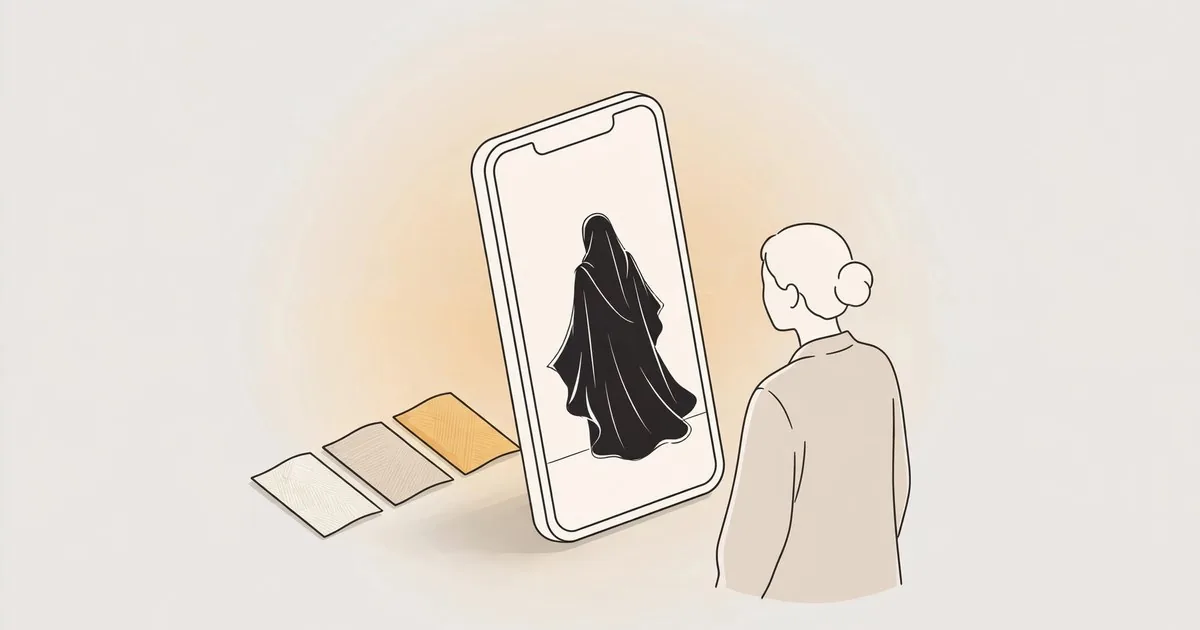
We test several angles for every fashion collection, because buyers decide for different reasons: some care about size and cut, some about fabric and embroidery, and others about the look at an occasion or an honest opinion after wearing it. We write different openings for each angle in the right dialect, then scale what proves itself:
Yes, they suit TikTok, Snapchat and Reels ads. We produce abaya videos vertically in 9:16 at 1080×1920 with a fast pace, put a shot that grabs attention, such as the fabric moving or an embroidery detail, in the first three seconds, add the message as on-screen text for viewers without sound, and include several openings to test.
A shopper wants to know how the piece will look on her before buying, so we show the abaya on more than one body type and height and state the cut (cloche, butterfly, open, belted) and the available lengths in on-screen text. That cuts sizing questions in messages and returns caused by wrong expectations.
The main abaya ad seasons in the Gulf are Ramadan and Eid, then winter and the start of the school year, and each season needs different pieces and a different message. So we prepare each season's versions well ahead, letting openings be tested on a small budget before peak competition, then scale the winning version as demand starts:
Read also: Preparing Ramadan 2027 ads with AI
Before production we agree with you on the right level of modesty for your audience: headscarf or niqab, sleeve length and the kind of movement in the scene. Digital characters are licensed and do not resemble real people, and we can use close-ups of the piece without a face if that suits your brand better.
Each collection gets a main ad showing the pieces together at a fast pace, then short ads per piece focused on one detail. That shows you which piece earns the clicks, and the scenes can be reused in catalog ads on Meta and TikTok.
The costliest mistakes in fashion ads hide what decides the purchase: the fabric, the embroidery, the true color and the sizes available. A distant shot or lighting that shifts the fabric's color makes the piece look different from reality, and one video for everyone wastes the chance to test different openings. The most common ones:
Read also: A guide to AI abaya video ads
A general comparison of common ways of working; details vary by provider and agreement.
An active fashion store typically needs 30 to 200 ad versions monthly, depending on budget and the number of items, because Meta and TikTok algorithms reward creative variety. Repeating the same few videos raises the cost per purchase over time.
Yes. Meta and TikTok accept AI-generated ads as long as they comply with their advertising policies and do not mislead viewers, with the AI-generated content disclosure option enabled in Ads Manager when needed.
We work from your real photos of the piece and check color and embroidery in every version before delivery. If you notice a color difference we redo the shot, because color mismatch is one of the most common reasons for fashion returns.
Yes. Every version is delivered in the vertical 9:16 format used by Snapchat, TikTok and Reels, with a fast opening and on-screen text that reads without sound.
Fashion · Abaya
Abaya UGC: Street Look
Fashion · Abaya
Abaya UGC: Try-On
Fashion · Abaya
Abaya UGC: Fabric Detail
Fashion · Abaya
Abaya UGC: Review