
Beauty · Makeup
Eye Makeup Close-up
Your audience sees the same ad too often and starts ignoring it, while the algorithm has already converted the most interested buyers. Early signs include rising frequency, fewer clicks, and a higher cost per order. The solution is to have new versions ready before performance drops.
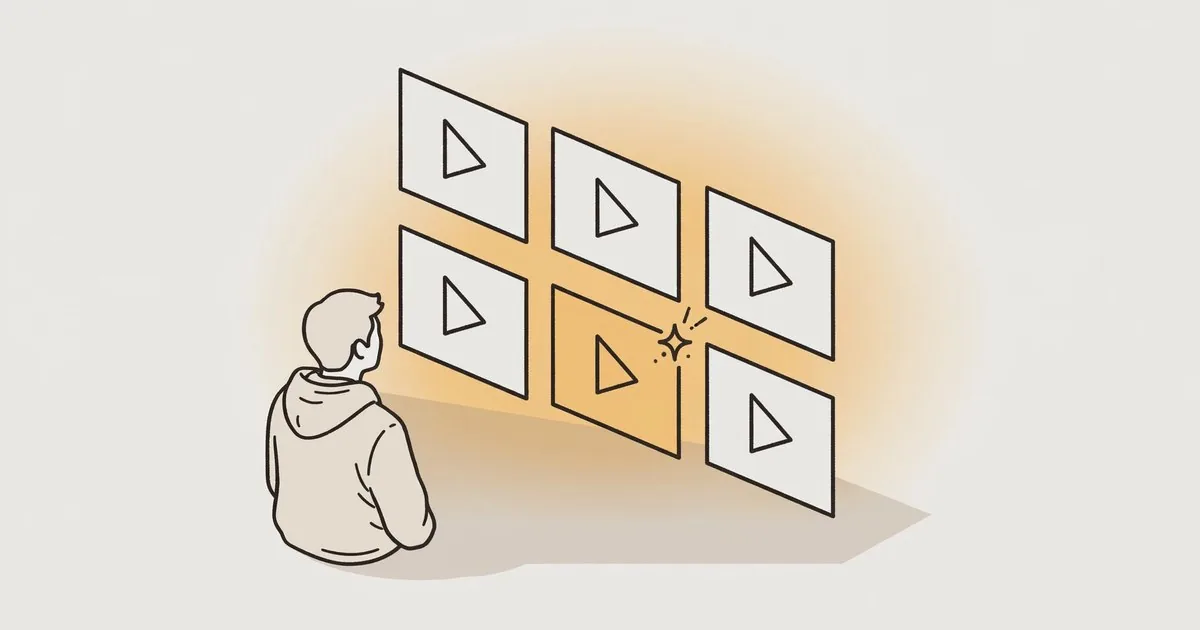
A reserve ad bank is a set of ready versions, more than the campaign needs right now, launched before the current ad tires. We build it from new openings on the winning message and the same message with a different face or dialect, and launch the new versions on a small budget so a tested replacement is ready when the old ad declines:
Read also: Weekly content from one shoot day
The right number is between 30 and 200 versions a month, depending on your budget and how many products you sell, because campaigns that rely on a few videos tire their audience faster. According to Meta's engineering blog (December 2024), Andromeda retrieves candidate ads for each person with finer personalization, so varied versions give the system more options for each audience.
Official source: Meta Engineering: the Andromeda ad retrieval system (December 2024)
The 5 × 3 × 2 formula splits an ad into three independent modules: five different openings, three bodies that show different sales angles, and two endings with a call to action. Combining these modules gives 30 versions from a limited set of production material, and each version differs in one element you can measure and compare:
A sales angle is the reason to buy that an ad focuses on, and each month we test five core angles: breaking a false belief about the product, the economic comparison, answering the buyer's biggest objection, before and after, and the sceptic who changed their mind. Testing different angles reveals what actually persuades your audience:
Scaling ad creative is a five-step monthly cycle: we choose the product's sales angles, write openings, messages and closing lines for each angle, produce the versions and deliver them in batches, then you launch the campaign and compare results, and we build the next batch on the winners. Repeating the cycle every month keeps the campaign fresh:
Read also: The Hook × Body × CTA ad testing matrix
The costliest ad testing mistake is changing many things in one version, so you never know what made the difference. Other mistakes are stopping an ad before it has gathered enough data, waiting for it to decline before preparing a replacement, and testing openings so similar that they reveal nothing new about your audience:
Read also: Why winning ads decline after two weeks
Before launching a new batch of ads, make sure it has at least five openings of different types, one clear message per version, two closing lines to compare, and clear names for every version so the results are easy to read later. This structure turns every batch into a test that teaches you something new about your audience:
Read also: Gulf ad Hooks bank
You know an ad is starting to tire when three signs appear together: the same person sees it more often, the click-through rate falls, and the cost per order rises while the budget stays the same. Watch these signs weekly, and launch new versions from your ad bank when they appear instead of waiting for results to fall further:
Read also: Fixing Creative Fatigue on Meta and TikTok
Read also: What frequency, CTR and ad fatigue mean
A general comparison of common ways of working; details vary by provider and agreement.
The first batch arrives 48 to 72 hours after script approval, and further batches follow through the month according to your package, from 30 to 200 videos. Every video is vertical 9:16 at 1080×1920, ready for Meta, TikTok, Snapchat and YouTube Shorts.
Production is managed with human creative direction: our team writes the scripts and directs production, and you approve every script before it is made. We never present AI characters as real customers or genuine testimonials.
Yes. Versions of the same message can be written in Saudi (Najdi or Hijazi), Emirati or general Gulf Arabic, or in English, so you can compare which version suits your audience. You approve every script before production.
Yes. We make a free sample video of your product before payment, so you can judge the quality and dialect before choosing a package.
We work with stores and brands in Saudi Arabia, the UAE, Kuwait, Qatar, Bahrain and Oman. Contact is over WhatsApp, and all we need to start is your product photos and store link.
Beauty · Makeup
Eye Makeup Close-up
Motion Graphics
Animated Brand Explainer
Fitness · Trifit
Trifit UGC Ad
Fitness · Trifit
Trifit Product Demo