
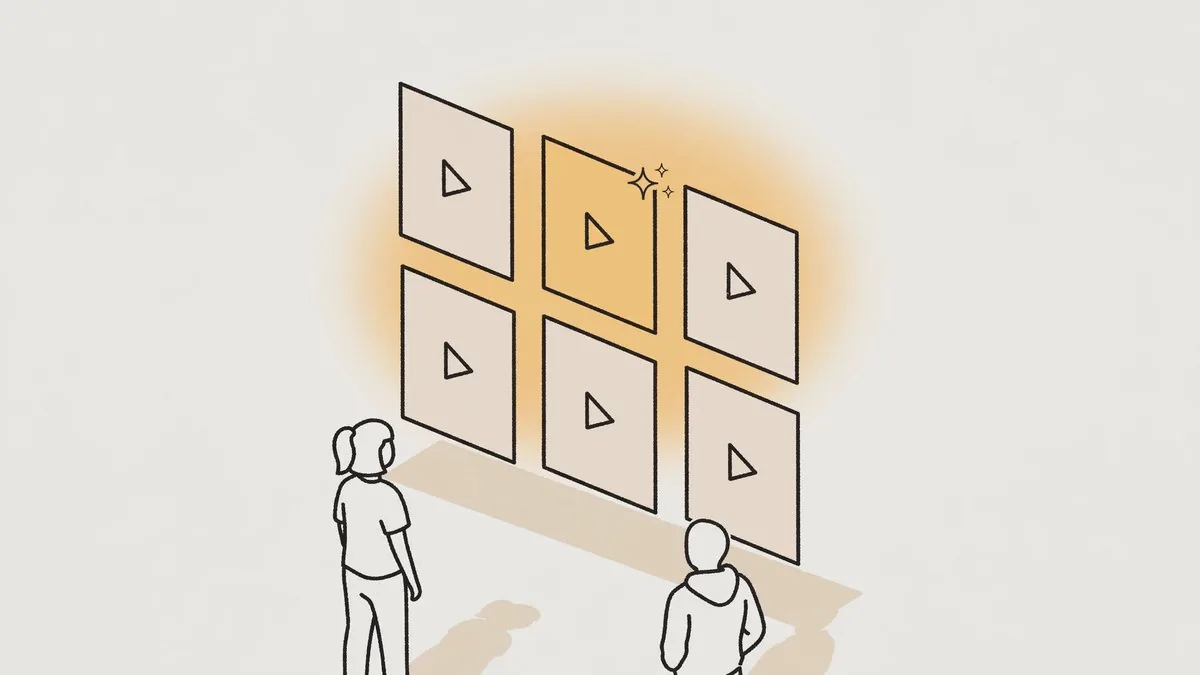
The takeaway: You do not have to choose between filming and AI. Hybrid production means filming only what needs to be filmed, such as the real product, location, or founder, then using AI to build dozens of variations from it: new hooks, additional scenes, and different dialects and aspect ratios.
When is real footage essential?
- When the product's actual texture or movement is the reason people buy.
- When you want a recognizable real face: the founder, the clinic's doctor, or the restaurant's chef.
- When the location itself is the product: a hotel, gym, or restaurant.
- For a major brand ad that will run for a long time.
When is AI alone enough?
- Everyday performance ads that need constant refreshing.
- Testing many angles and hooks quickly.
- Products where clear photos are enough to build the scenes.
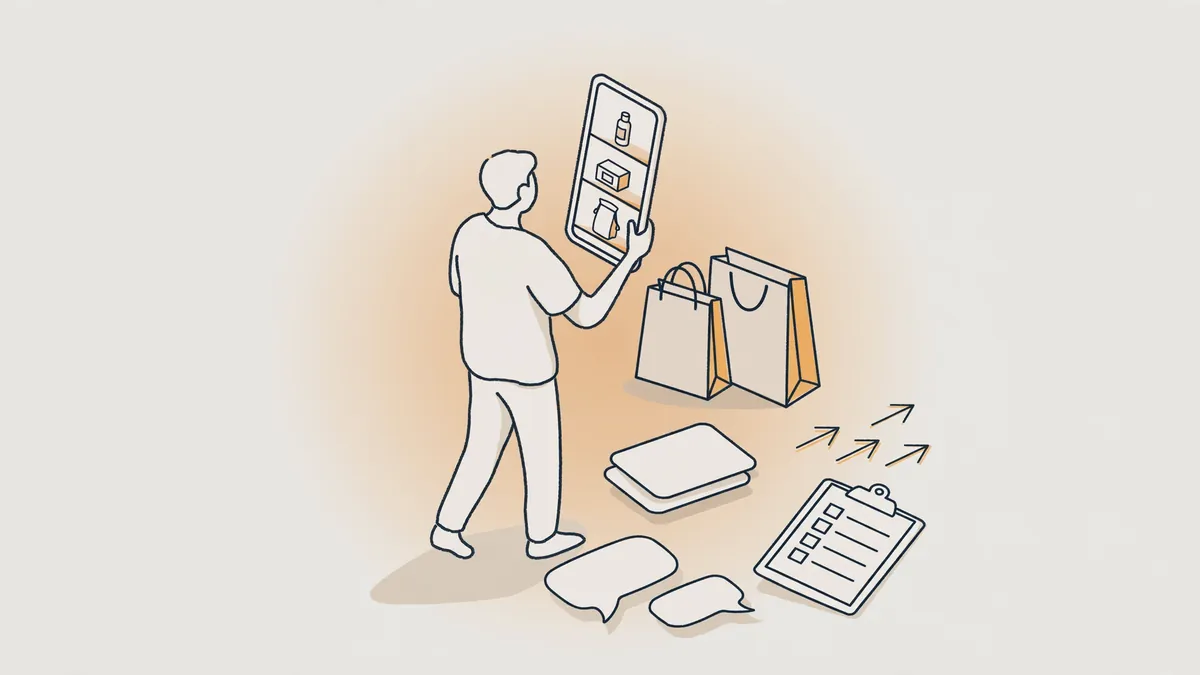
How does hybrid production work?
- A short, focused shoot day: Footage of the product, person, or location only.
- A footage library: We organize it and prepare it for use.
- Scaling with AI: New hooks, supporting scenes, and variations in different dialects.
- Aspect ratios: Each variation in the right aspect ratio for each platform.
The result: the credibility of real footage, with the scale and speed of AI.
Example
A cosmetic clinic films its doctor explaining a procedure once. From that footage, we build variations with different hooks, illustrative scenes, short versions for Snapchat, and longer versions for YouTube.
How do you plan a short shoot day for hybrid production?
Before the day, list the shots nothing can replace: the founder's face, the real place and the actual product experience. Film only those in a short session, and leave supporting scenes such as backgrounds and product shots to AI. Filming time drops while the most important shots stay real.
Common mistakes in hybrid production
- An obvious mismatch in lighting and color between real and generated shots.
- Using AI to change a real person's features without their consent.
- Generated scenes that suggest a place or service that does not exist.
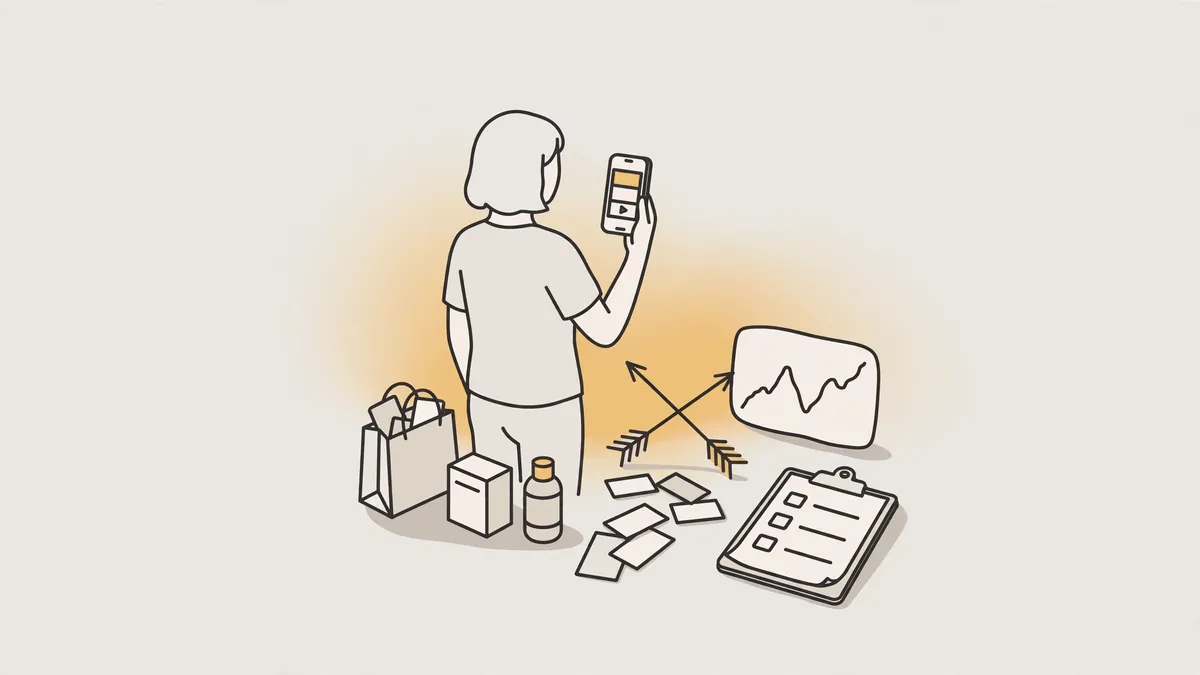
What do we film, and what do we build with AI?
The simple rule: film what cannot be replaced, and build with AI what repeats. The founder's real face, a distinctive location and fine product details are worth filming. Alternative hooks, usage scenes, backgrounds and sizes are built from that footage without going back to set.
Founder's or doctor's face
- Real filming
- Yes
- AI
- No, unless they clearly consent
Fine product details
- Real filming
- When needed
- AI
- From approved product photos
Alternative hooks
- Real filming
- No
- AI
- Yes
Usage scenes and atmosphere
- Real filming
- Sometimes
- AI
- Yes
Sizes and languages
- Real filming
- No
- AI
- Yes
How do you work out the value of mixed production?
Do not compare the cost of the shoot day alone; compare how many testable versions it produces. A traditional shoot day usually ends with a limited number of ads. In mixed production, the same day's footage becomes raw material for extra versions with different hooks, sizes and dialects.
- Work out how many versions you need to test each month.
- Identify the shots that cannot be replaced and film them in a short session.
- Order the extra versions from that footage with AI.
- Compare the cost per version between the two methods, not the cost per day.
Can you use videos you filmed before in hybrid production?
Yes, if the footage is clear and you own the right to use it. Videos you already have, from a previous campaign or your team's phone, can save you a new shoot day and become the base for extra versions. We review them first, tell you what is usable, and confirm that everyone who appears in them agrees to their use in ads.
- Clear lighting and a steady, shake-free shot.
- A frame with room for the vertical 9:16 format.
- Clean audio if someone is speaking.
- A product or place that has not changed since filming.
Frequently asked questions
How long does hybrid production take? It depends on the shoot date; the versions are then built around the real footage after script approval.
Will viewers notice the difference? We aim for consistent lighting and color, and disclose generated content when the platform requires it.
When do I need no filming at all? For products that can be shown from their photos, such as perfume, cosmetics and packaged goods.
Do I need a new shoot day every month? Not necessarily. One day's footage can feed several batches. A new shoot is only needed for a new product or a different season.
Who owns the filmed footage and the resulting versions? That is set in the written agreement before work starts, including usage rights, platforms and duration.
Can the founder speak in their own dialect while the extra versions use another? Yes. Their words stay exactly as they said them, and the hooks and supporting scenes are built in Emirati, general Gulf or English, for example. We do not change their voice or words without their consent.
Can I try your style before paying? Yes. We prepare a free sample video before payment, and you can request it from the booking page.
Read also Ad Production Without a Film Crew.
Part of our approach to Scaling Ad Creative from 30 to 200 Videos per Month.