
Summary: This is a short glossary of the best-known digital advertising terms on Meta, TikTok and Snapchat, such as CPM, CTR, CPA, ROAS, the hook and ad fatigue. Each term has a plain meaning and how it is calculated or when to look at it, so you can read your results dashboard with confidence and know which part of an ad needs work.
What do impressions, reach, frequency and CPM mean?
Impressions are the number of times an ad is shown on screens, reach is the number of different people who saw it, and frequency is how many times one person saw it on average. CPM is the cost of a thousand impressions, and it tells you what you pay to reach the audience before anyone interacts with the ad or buys.
Impressions
- Meaning
- How many times the ad was shown
- How it is calculated
- Counted by the platform
Reach
- Meaning
- How many different people saw the ad
- How it is calculated
- Counted by the platform
Frequency
- Meaning
- How many times one person saw the ad on average
- How it is calculated
- Impressions ÷ reach
CPM
- Meaning
- The cost of every thousand impressions
- How it is calculated
- (Spend ÷ impressions) × 1000
Frequency that rises over time is a sign that the same audience sees the ad many times, and that is one of the first causes of boredom.
What do CTR, CPC and conversion rate mean?
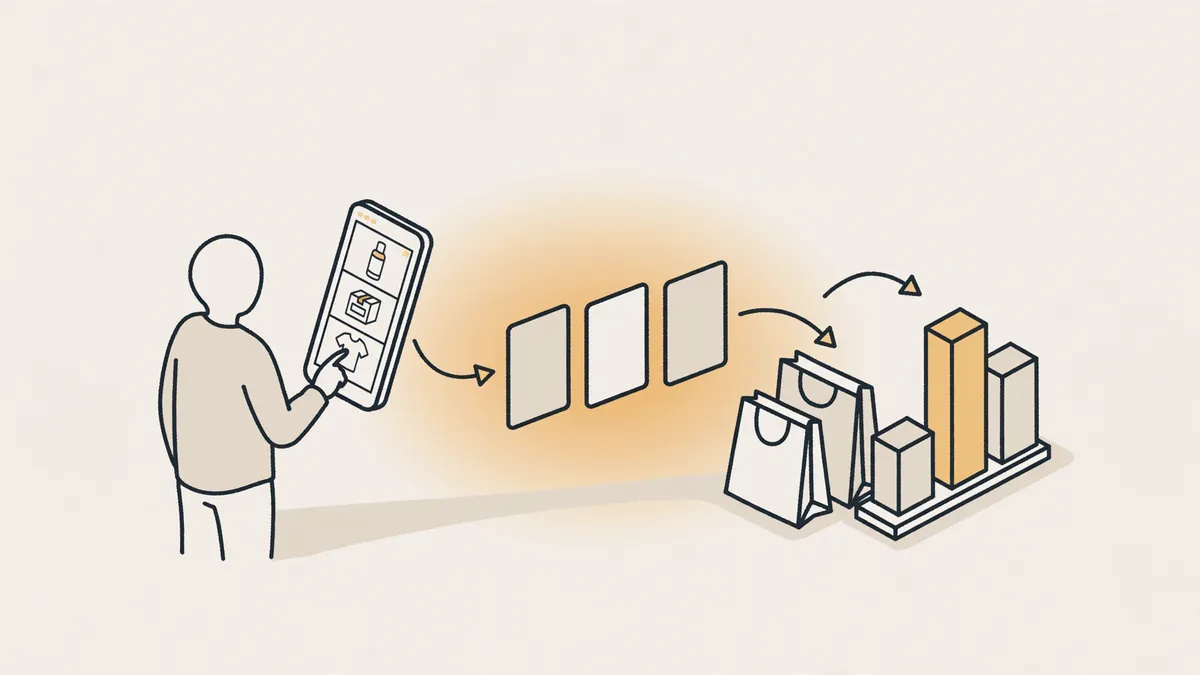
CTR is the click-through rate: how many people clicked the ad out of everyone who saw it. CPC is the cost of a single click, and the conversion rate is the share of people who completed the desired action out of those who clicked. Together these three tell you whether the ad persuades the viewer to take the next step, and whether the store page finishes what the ad started.
CTR (click-through rate)
- Meaning
- The share of people who clicked the ad
- How it is calculated
- Clicks ÷ impressions, written as a percentage
CPC (cost per click)
- Meaning
- What you pay for each click
- How it is calculated
- Spend ÷ clicks
Conversion rate (CVR)
- Meaning
- The share who bought or sent a message
- How it is calculated
- Conversions ÷ clicks
If the click-through rate is good and the conversion rate is weak, the problem is usually the product page, the price or the shipping, not the video.
What do CPA, ROAS, CPI and average order value mean?
CPA is the cost of getting one customer or conversion, and ROAS is the return on ad spend: the ad's revenue divided by what was spent on it. CPI applies to apps and is the cost of one install, and the average order value is what a customer pays in one order, which sets how much you can spend to win a customer.
CPA (cost per acquisition)
- Meaning
- The cost of each purchase or conversion
- How it is calculated
- Spend ÷ conversions
ROAS (return on ad spend)
- Meaning
- Revenue for every unit of spend
- How it is calculated
- Ad revenue ÷ spend
CPI (cost per install)
- Meaning
- The cost of each app install
- How it is calculated
- Spend ÷ installs
AOV (average order value)
- Meaning
- What a customer pays per order on average
- How it is calculated
- Revenue ÷ orders
If your product is an app, our app-install ad guide explains weekly video testing and what to measure alongside CPI.
What do the pixel, retargeting and lookalike audiences mean?
The pixel is code placed in your store that tells the platform what a visitor did after the ad, such as adding a product to the cart or completing a purchase. Retargeting means showing the ad to people who visited the store or interacted before, and a lookalike audience is a new audience the platform picks because it behaves like your current customers.
Pixel
- Meaning
- Code that records what a visitor does in the store
- When you need it
- Before running any sales campaign
Conversions API
- Meaning
- Sending the same events directly from the server
- When you need it
- To complete the pixel's data
Conversion
- Meaning
- The action you want: a purchase, a message or an install
- When you need it
- To set the campaign goal
Retargeting
- Meaning
- Ads for people who visited or interacted before
- When you need it
- To remind people who hesitated
Lookalike
- Meaning
- A new audience that resembles your customers
- When you need it
- To grow after the first sales
Broad
- Meaning
- General targeting that leaves the choice to the platform
- When you need it
- When the ad itself is clear in its message
What do the hook, the angle and the call to action mean?
The hook is the opening of the ad that stops the scroll in the first seconds, and the angle is the reason to buy that the ad focuses on, such as a gift, the price or comfort. The call to action is the final line that tells the viewer what to do now. Changing any one of them creates a new version worth testing.
Hook
- Meaning
- The first one to three seconds of the video
- Example
- A direct question or a surprising scene
Body
- Meaning
- The middle of the ad that explains the benefit
- Example
- How it is used or what is different
Call to action (CTA)
- Meaning
- The step asked of the viewer
- Example
- Order now or message us
Angle
- Meaning
- The reason to buy the ad highlights
- Example
- A gift, comfort, material quality
Variation
- Meaning
- An ad with one part of the original changed
- Example
- A new opening for the same video
How to build versions from these parts is in the ad testing matrix.
What do ad fatigue and A/B testing mean?
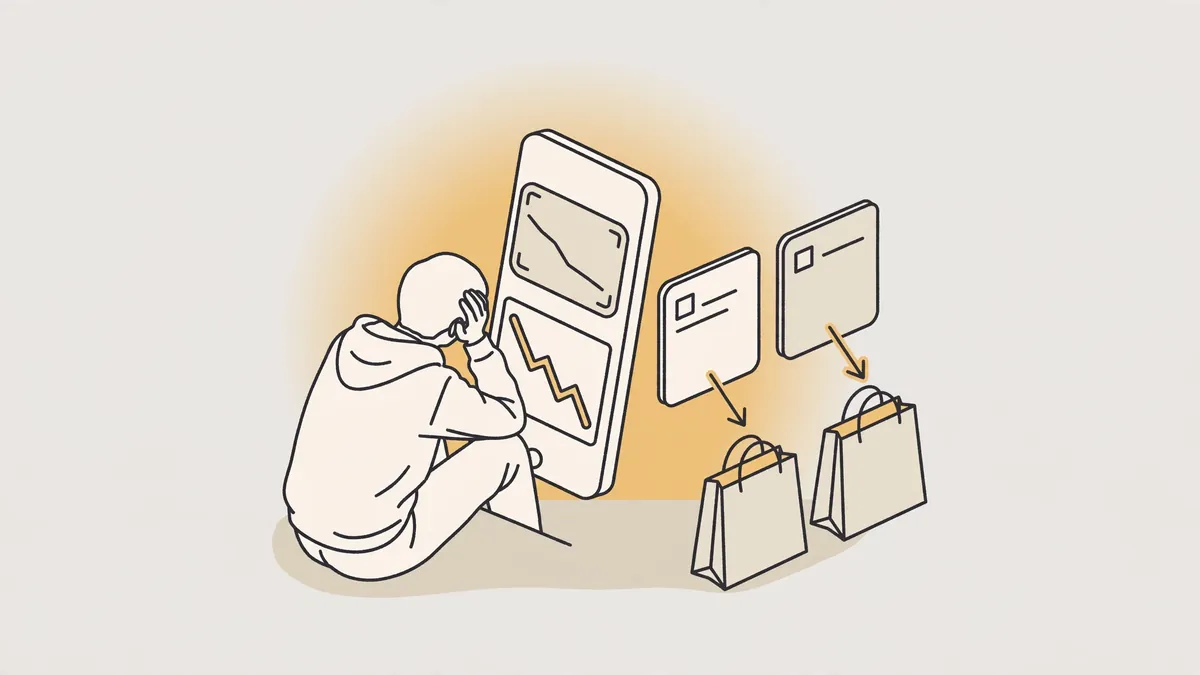
Ad fatigue means the audience has grown tired of an ad after seeing it many times, so its results weaken gradually even though it used to work. An A/B test compares two versions that differ in only one element, such as the opening, to find out which is better. The usual cure for fatigue is to prepare new versions before the current ad weakens.
Ad fatigue
- Meaning
- The audience tiring of a repeated ad
- Sign or method
- High frequency and a falling click-through rate
A/B test
- Meaning
- Comparing two versions on one element
- Sign or method
- Change only the opening and keep the rest
Winner
- Meaning
- The best version in the test
- Sign or method
- Extended with close variations
Creative diversification
- Meaning
- Ads that differ in idea, not in details
- Sign or method
- Different angles, people and settings
Why a winning ad declines and how to prepare for it is in Why winning campaigns collapse after 14 days.
What do Hook Rate, Thumbstop and Hold Rate mean?
Hook Rate, which some call Thumbstop, measures how many people watched the first seconds of an ad, often the first 3 seconds, out of everyone it was shown to. Hold Rate measures how many of them kept watching to a later point, such as the middle or the end of the ad. The first judges the opening and the second judges the body, and each platform and report counts them a little differently.
Hook Rate or Thumbstop
- Meaning
- Who watched the first seconds, out of everyone shown the ad
- What it tells you
- Whether the opening stopped the scroll
Hold Rate
- Meaning
- Who kept watching to a later point
- What it tells you
- Whether the body kept people interested
Full views
- Meaning
- Who watched the ad to the end
- What it tells you
- Whether the length suits the message
Compare these metrics with your own account average, not with general figures, because the product, audience and platform all change them.
What do Spark Ads, Advantage+ and Smart+ mean?
These are names of ad options inside the platforms. Spark Ads on TikTok promote an ordinary post from a TikTok account as an ad while keeping the engagement on it, Advantage+ on Meta is a set of automated settings that leave the audience and placements to the system, and Smart+ on TikTok is a similar automated campaign. Their details change often, so check the official help pages before relying on them.
Spark Ads
- Platform
- TikTok
- The idea in short
- Promoting an organic post as an ad
Advantage+
- Platform
- Meta
- The idea in short
- Leaving targeting and placements to automation
Smart+
- Platform
- TikTok
- The idea in short
- Automated targeting and delivery
Catalog ads
- Platform
- Meta, TikTok and Snapchat
- The idea in short
- Ads built from the store's product list
The more these campaigns rely on automation, the more it matters to feed them ads that vary in their idea.
What do the 9:16 size and the safe zone mean?
The 9:16 size is the vertical video that fills a phone screen, and it is the standard on TikTok, Snapchat, Reels and YouTube Shorts. The safe zone is the part of the screen not covered by the platform's buttons, account name and caption, so the product and the key text must stay inside it and not disappear behind the interface.
9:16
- Meaning
- A full-screen vertical video
- Practical tip
- The basis of mobile ads
Safe zone
- Meaning
- The middle of the screen, away from the buttons
- Practical tip
- Put the product and the text there
On-screen text
- Meaning
- Words shown over the video
- Practical tip
- Important for people watching without sound
Details of the other sizes are in One ad in every size.
How do you read these metrics together?
Read them in the order of the viewer's journey: first, did people stop at the video, then did they click, then did they buy and at what cost. This order shows exactly where the problem is: a weak opening, a message that does not persuade, or a store page that does not finish the sale. And do not judge an ad on one day or on a small number of impressions.
- Look at the share of people who watched past the first seconds to judge the hook.
- Look at the click-through rate to judge the message and the call to action.
- Compare the cost per acquisition and the return on ad spend to judge profitability.
- Watch frequency and click-through rate together to spot fatigue early.
- Change one element in each test so you know what caused the improvement.
How can you try this on your product?
Request a free sample video before any payment. Product photos and a store link are enough, with no sample shipping, and the first batch arrives 48 to 72 hours after script approval, in 9:16 for Meta, TikTok, Snapchat and YouTube Shorts.
Read also: How to Write a Short Ad Video Script
Read also: Click-to-WhatsApp Video Ads: From View to Chat?
Read also: TikTok Ads for Online Stores in Saudi Arabia
Read also: Instagram Ads for Stores: Reels and Stories Design
Read also: Snapchat Ad Sizes and Video Specs Guide
Read also: Short Ad Video Editing: What Holds Attention?
Frequently asked questions
What is the difference between CPM and CPC? CPM is the cost of a thousand impressions whether or not anyone clicks, while CPC is the cost of a single click on the ad.
What is the difference between ROAS and ROI? ROAS divides the ad's revenue by its spend only, while ROI measures profit after all costs such as the product, shipping and operations.
Does a higher click-through rate mean more sales? Not always. People may click out of curiosity and not buy, so the click-through rate is read together with the conversion rate and the cost per acquisition.
What is the most important metric for short video ads? There is no single one. Start with the share of people who watched past the first seconds, because it measures the hook, then move on to clicks and purchases.
What does UGC mean in advertising? UGC means content in the style of ordinary users, and the full explanation is in What is UGC?.
Part of our approach to Scaling Ad Creative from 30 to 200 Videos per Month.