
Key takeaways: Clear beauty product ads start with one scene that shows texture, colour or a routine step, then turn a strong image into a short video with one line and one call to action. Prepare product photos, lines and claim limits before production, and test more than one opening for the same idea before changing it completely.
Which visual styles suit beauty product ads?
Start by choosing one clear scene for each ad: moving texture, a routine step, a product in hand or a set arranged on a shelf. Focus on what the camera can actually show, and leave treatment claims and before and after results out of the idea from the start, so the ad stays simple to make and review.
Texture close up
- What the scene shows
- The product moves slowly near the pack opening
- What to prepare first
- Side light, a clean surface and a pack with a clear logo
Routine step
- What the scene shows
- The pack sits between two steps on a tidy table
- What to prepare first
- A written step order and short on screen text
In hand demo
- What the scene shows
- A hand turns the pack and brings it closer to camera
- What to prepare first
- A calm background, a steady hand and light that keeps the logo visible
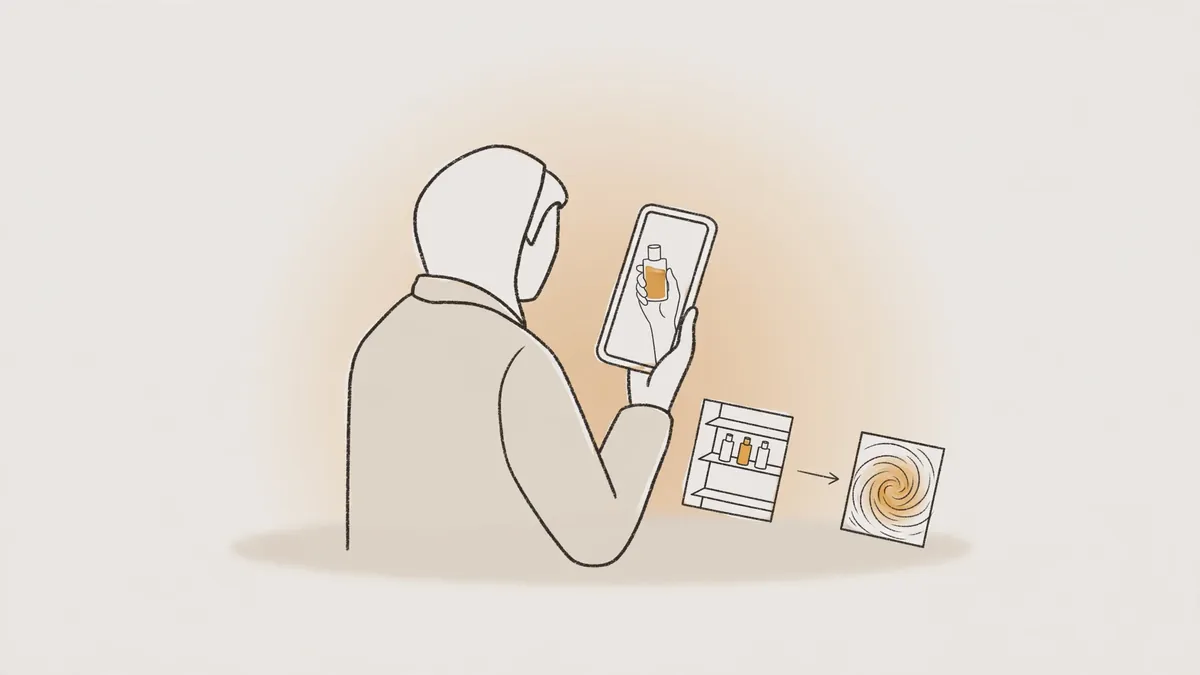
Shelf scene
- What the scene shows
- The product sits in a daily care corner near a mirror and folded towel
- What to prepare first
- A tidy place and colours close to the product identity
Ingredient story
- What the scene shows
- An ingredient name as it appears on the pack, with a simple visual beside it
- What to prepare first
- The pack wording itself, with no added benefit
Gift set
- What the scene shows
- Pieces are arranged inside an open box with a blank gift card
- What to prepare first
- An arrangement that shows every piece clearly
Start with the style that explains your product with the least spoken explanation, and make each style a separate video instead of combining all six scenes into one scattered ad. For more on texture and routine scenes, see the skincare and beauty ads guide.
How do you turn a texture photo into a short video?
Start with a close shot that fills the screen, then move the product slowly so its thickness, shine and release from the pack are visible, before moving to a hand or applicator. Do not ask the scene to prove a skin result; let it answer one simple question: how does the product look, open and get used?
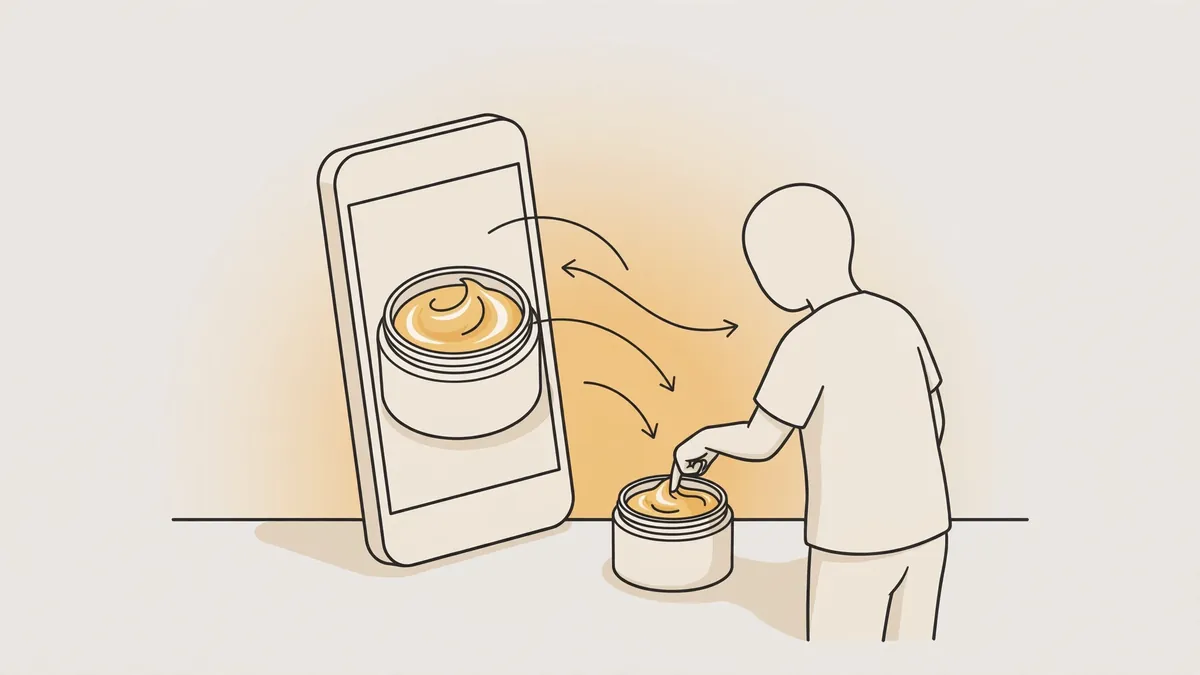
- Open on the texture itself before the full pack appears, so viewers know the ad topic from the first scene.
- Move a small amount slowly, and pause at the shine or thickness you want to show.
- Show the pack opening and how the product comes out, without exaggerating the amount.
- End with the full pack and a clear name, then add on screen text once the image is steady.
Write around the scene, not around result promises, and make each sentence describe what will appear in the next shot. You can order the sentences with the short video ad script template, then read them aloud before approving the version.
How do you build a skincare product ad as a routine step?
Place the product in its natural order inside a short routine: cleansing, then the product step, then a next step or closing the pack beside the mirror. The visible order explains use without treatment promises and helps viewers picture the moment in their morning or evening, using only the directions shown on the pack itself.
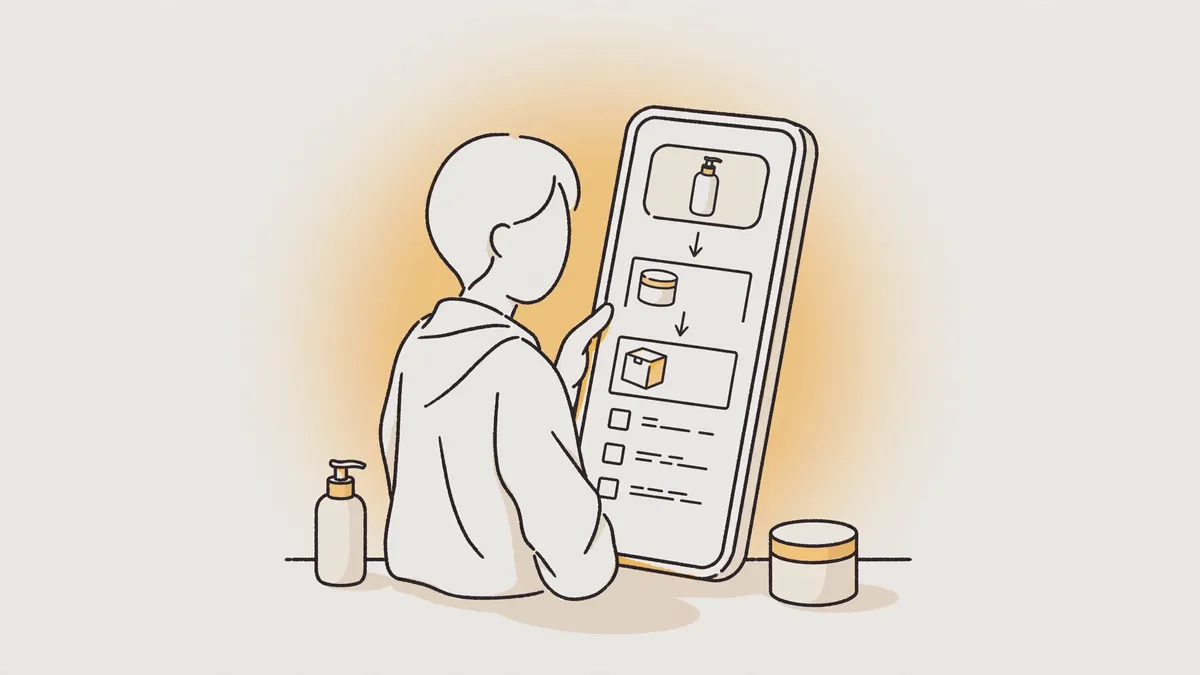
- First: show the pack near the mirror with a word that describes the time of use, such as morning or evening.
- Second: place one step before the product and one after it, so viewers understand its position without a long explanation.
- Third: move the camera closer when the product is placed on an applicator or in the palm.
- Fourth: close the pack and return it to its place, so the scene ending signals that the step is complete.
Where do you place beauty product marketing lines in a video?
Put the most important line at the start, as voice and on-screen text, then make the middle a visual explanation of one step, and end with one call to action such as visiting the product page or sending a question. A good line describes a moment, texture or use, without promising a fast result or using medical language.
Start of the video
- Its job
- Catch attention with a moment the audience knows
- Suggested example
- "What is your first step before makeup?"
Middle of the video
- Its job
- Describe what viewers see in the shot
- Suggested example
- "Look at the texture, then look at how the pack opens"
End of the video
- Its job
- Guide viewers to one action
- Suggested example
- "Go to the product page and see the colours yourself"
What is the ideal beauty ad length for TikTok, Snapchat and Reels?
There is no single ideal length for every product: a snappy ad suits a clear colour or texture, a medium one suits a routine step, and a longer one suits a gift set or multi-step use. Cut when one scene delivers the message, and add time only when each new scene adds visual information viewers need.
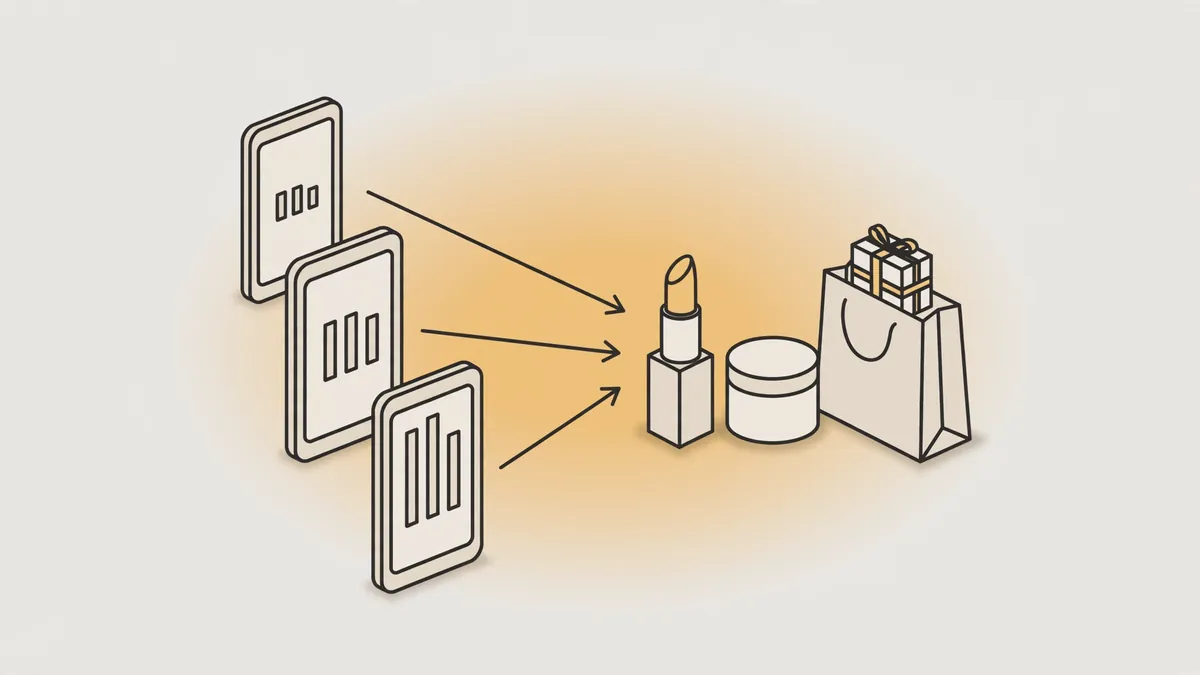
Snappy
- Best suited to
- A colour, texture or pack opening
- What to focus on
- One scene and one line
Medium
- Best suited to
- A routine step or in hand demo
- What to focus on
- An opening, visual explanation and call to action
Longer
- Best suited to
- A gift set or use in steps
- What to focus on
- A clear order and short text breaks
Review the ad silently first; if the message is clear from the images and short text, the length is probably enough for the chosen scene. To choose what suits Snapchat in particular, see the Snapchat ads guide for the Gulf.
How do I set up a simple phone shoot for makeup and skincare?
Prepare a corner near a window or soft light source, put the phone on a steady stand, clean the lens and pack, and keep the background calm so it does not compete with the product colour. Shoot colour and texture up close, then a wider shot of hand and pack, and check focus and excess shine before filming the rest.
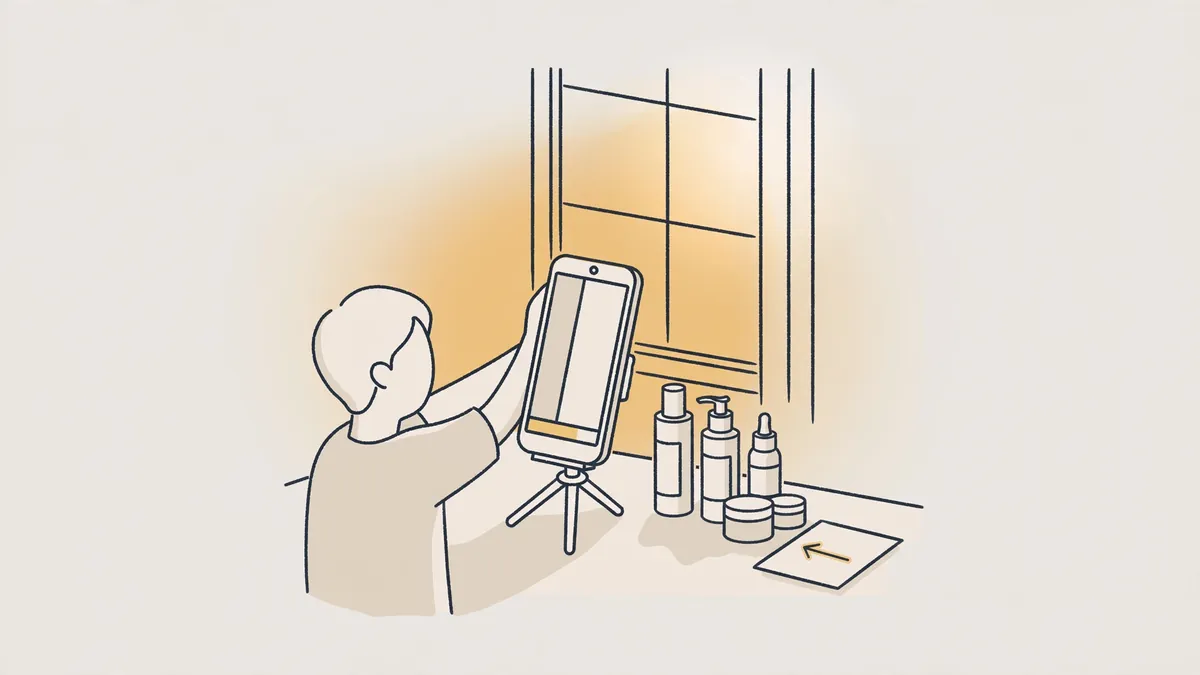
- Lighting: place the product near soft daylight or a front light, and avoid strong yellow light that changes the colour.
- Background: choose one surface in a calm colour, and move other packs away so the main product is not lost.
- Colour angle: bring the camera close to the brush or pack surface, and capture the colour as it appears without colour filters.
- Texture angle: shoot from above and from the side, so thickness and movement show as the product comes out.
- Steadiness and sound: fix the phone, leave space at the top of the scene for short text, and record voice in a quiet place.
How do I reuse one idea for makeup, hair and skin?
Keep one structure: a simple daily moment or choice, then the product reveal, then a use step, then one call to action. Change the product, first scene and line for makeup, hair or skin, but do not change every element at once, so you can see which change affected viewing and engagement when you compare versions.
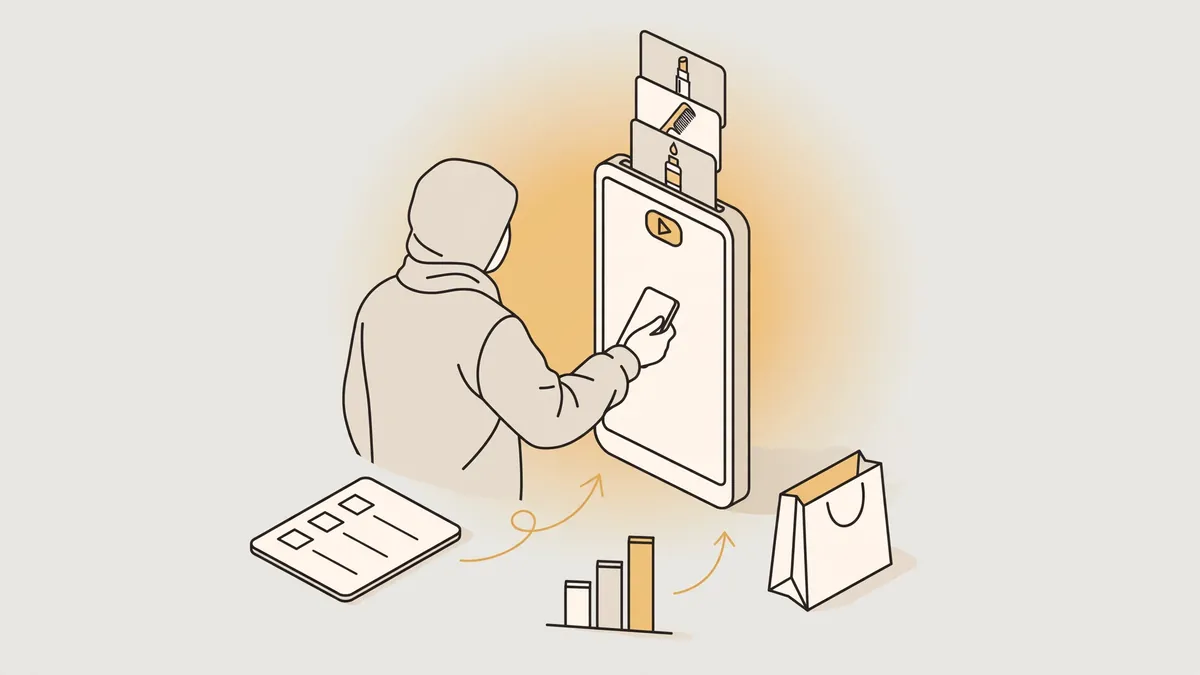
Opening
- Stays the same
- A question about a moment of choice
- Changes by category
- The moment topic changes by category
Middle scene
- Stays the same
- The product in hand, then a use step
- Changes by category
- The tool, opening method and display change
Ending
- Stays the same
- One clear call to action
- Changes by category
- The product name and its page change
Change one element in each version, and record the product name, category and opening in the file name, so results do not get mixed up when you compare. The way to order versions is explained in the ad testing matrix.
How can you try this on your product?
Request a free sample video before any payment. Product photos and a store link are enough, with no sample shipping, and the first batch arrives 48 to 72 hours after script approval, in 9:16 for Meta, TikTok, Snapchat and YouTube Shorts.
Frequently asked questions
What photos should you prepare before making a beauty ad? Prepare clear photos of the pack from the front, side and back, a photo of the texture or colour, the product page link, the directions written on the pack, and the words to avoid.
Can before and after scenes be used in a beauty ad? Avoid them, especially with care, brightening and blemish products, and focus on texture, a routine step and how the product opens and is used, leaving result promises out of the text and image.
How do you choose the right dialect for an ad sold in the Gulf? Choose by market: Najdi or Hijazi for Saudi Arabia, Emirati for the Emirates, or a general Gulf dialect or English when needed, then review the lines aloud before approving the script.
How do you review a beauty ad before publishing it? Review the clarity of the product name, colour and texture, the safety of claims, that the digital persona is not presented as a real customer, reading the text without sound, and that the vertical size suits the publishing channel.
For the full service, see AI Beauty and Skincare Video Ads.