
The takeaway: Ads that feel robotic usually fail because of the script, not the visuals. The secret comes down to three things: a script written in the dialect from the start (not translated from Modern Standard Arabic), a voice with an everyday conversational rhythm, and a human review of every version before delivery.
Why do some AI ads feel "artificial"?
Most ads that feel off to Gulf viewers share the same recurring mistakes:
- A script written in Modern Standard Arabic, then made "dialectal" by changing just a couple of words.
- Long, overly polished sentences that nobody uses in everyday life.
- A flat voice with no pauses, laughter, or natural hesitation.
- Vocabulary that does not fit the region: a Najdi word in an ad targeting Jeddah, or vice versa.
Step 1: Write in the dialect from the very first line
At LogiTrack AI, we write scripts directly in the target dialect: Najdi, Hijazi, general Gulf, or Emirati. We use short sentences and everyday expressions equivalent to "I swear," "honestly," and "I've tried it," and open with a problem the customer actually faces, not the product specifications.
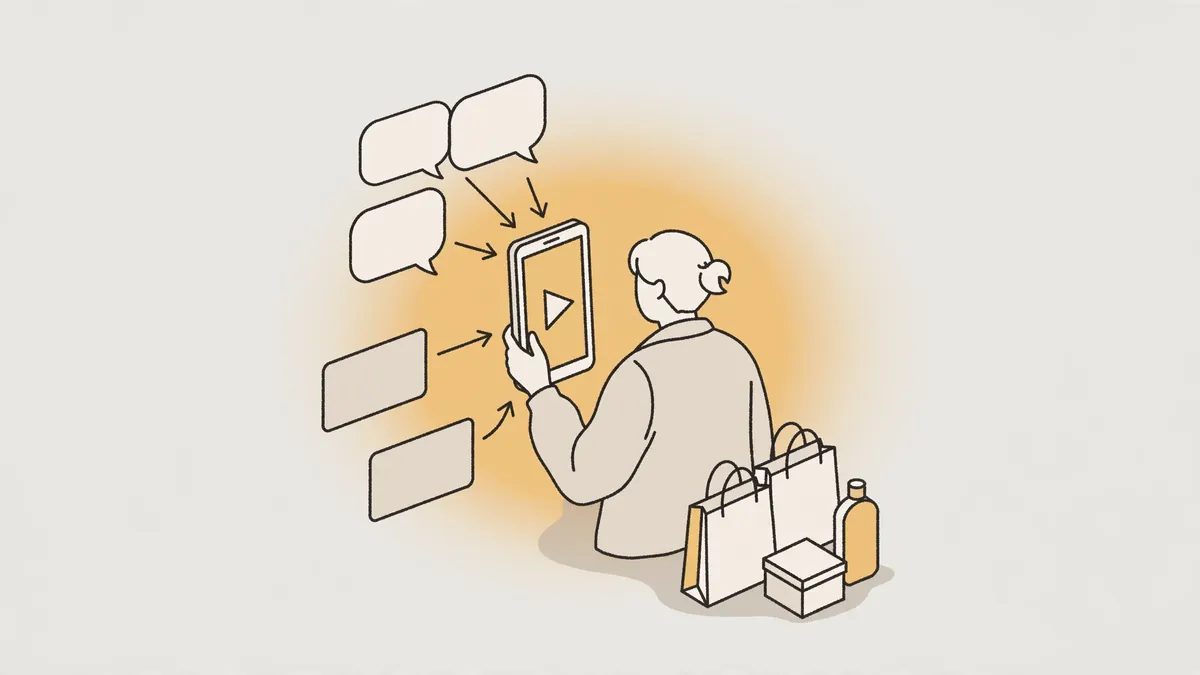
An example opening (Hook) in Saudi dialect for a skincare product:
"Honestly, I'd been looking for something to sort out my dry skin in winter… and I finally found it."
Step 2: Voice before visuals
The voice is the first thing that gives away a robotic ad. We choose a tone that suits the category: calm for luxury perfumes, fast and energetic for offers, and warm for children's products and personal care. Then we adjust the speaking pace and pauses to sound like a real person talking to their phone camera.
Step 3: Lip sync and facial details
Any delay between the audio and mouth movement breaks trust immediately. We manually review every shot and reject footage with unnatural eye or hand movements.
Step 4: Human review
Every video is checked by a reviewer who speaks the same dialect before delivery. This simple step is the difference between an "acceptable" ad and one that stops the scroll.
What should I send you to produce a Saudi or Gulf dialect ad?
To produce an AI video ad in a Saudi or Gulf dialect, all you need to send is clear product photos and your store link, and tell us which city or country you are targeting. You do not need to ship a sample or film anything. From this we choose the dialect and write the script, then send it to you for approval before production starts.
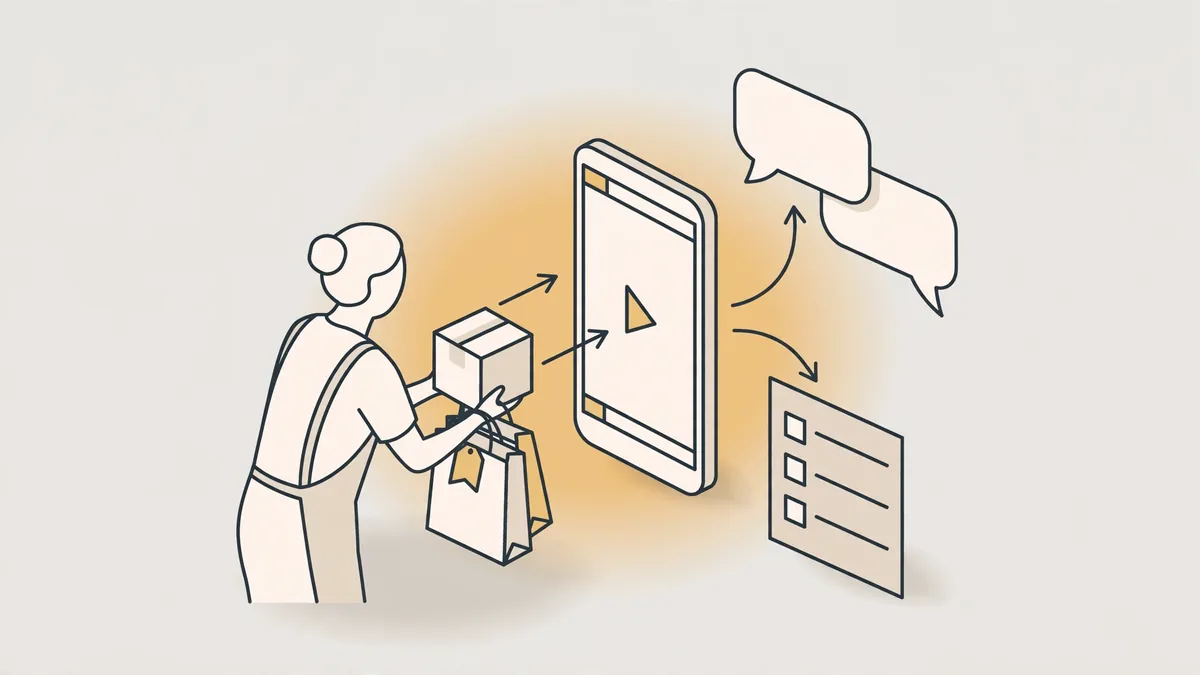
Clear product photos
- Why it matters for a dialect ad
- The product appears in the scenes exactly as it is
Your store link
- Why it matters for a dialect ad
- We take the product name and benefits as your customer sees them
Target city or country
- Why it matters for a dialect ad
- We use it to choose Najdi, Hijazi, Emirati or general Gulf
Words your customers repeat in reviews or messages
- Why it matters for a dialect ad
- They keep the script close to how people really talk
How do I review a dialect script before approving it?
The best time to change wording is before you approve the script, because production starts right after and the first batch reaches you within 48 to 72 hours. Review the text as if you were your own customer, and ask yourself at every sentence: would I really say this in these words? If you hesitate over a word, it probably needs changing.
- Read the script aloud at least once.
- Underline any word you never hear from customers in your city.
- Check that the product name, price and offer match your store.
- Write your note as the exact replacement word, not a general comment like "change the style".
If you would like to see the style first, ask for a free sample video before you pay.
How do you choose the dialect by city?
- Riyadh and the central region: Najdi dialect.
- Jeddah, Makkah and Madinah: Hijazi dialect.
- A campaign across Saudi Arabia: a neutral Saudi dialect everyone understands.
- The UAE, Kuwait and Qatar: general Gulf dialect, with an English version for the UAE when needed.
If you are not sure, test two dialects for the same ad and let the results decide.
If you also sell in Kuwait, Qatar, Bahrain or Oman, our guide to AI UGC ads in those four markets covers choosing the dialect and the delivery message for each one.
Voice mistakes that give away a generated ad
- Mispronouncing product or city names.
- One flat tone with no pauses.
- A speaking pace that does not fit the on-screen text.
- Mixing words from different dialects in one sentence.
Read also: Beauty Product Ad Ideas and Examples for Social Media
Frequently asked questions
Is the on-screen text in the same dialect as the voice? Yes, and it works best when the on-screen lines match the spoken words, so viewers never read one phrase and hear another. The product name and price are written exactly as they appear in your store.
Does the same dialect version work for TikTok, Snapchat and Reels? Yes. We deliver the video in 9:16 at 1080x1920 to suit Meta, TikTok, Snapchat and YouTube Shorts. Before publishing, check each platform's current policy on disclosing AI-generated content.
Can you produce the same ad in more than one dialect? Yes, using the same product photos. You can test Najdi against Hijazi in the same campaign and see which works better for your audience.
Will viewers notice the ad was made with AI? When the script sounds natural and the voice is well tuned, viewers focus on the message and product. We also follow each platform's disclosure policies.
Part of our approach to AI UGC Ad Production in Saudi Arabia and the Gulf. For platform rules, see AI ad policies on Meta and TikTok.