

Key takeaways: Choosing between Dubai ad filming and AI production starts with the nature of the scene and the number of versions needed, not the tool alone. Film reality when place, person or event is part of the proof, and use AI production when a clear product photo can carry a short explanation and many testable versions.
When should your store choose Dubai ad filming or digital production?
Digital production is enough when the product is clear in photos and the message depends on a benefit, offer or quick comparison, while traditional filming suits a buyer who must see a real place, a real person or an experience that needs presence. Decide first what viewers must believe, then choose how to produce it.
Product explanation and many versions for testing
- Closest choice
- AI production
A place customers visit or an event
- Closest choice
- Real filming
A founder or expert building personal trust
- Closest choice
- Real filming or a mix of both
A seasonal message that changes quickly
- Closest choice
- A mix or digital production
Ask: is the place itself sales proof, is a real face part of trust, and are many hooks needed? The answers draw the boundaries between the options and prevent effort on scenes that add no new proof. The guide to ad production without a filming crew explains the limits of the digital option.
What does a Dubai advertising video shoot require before filming day?
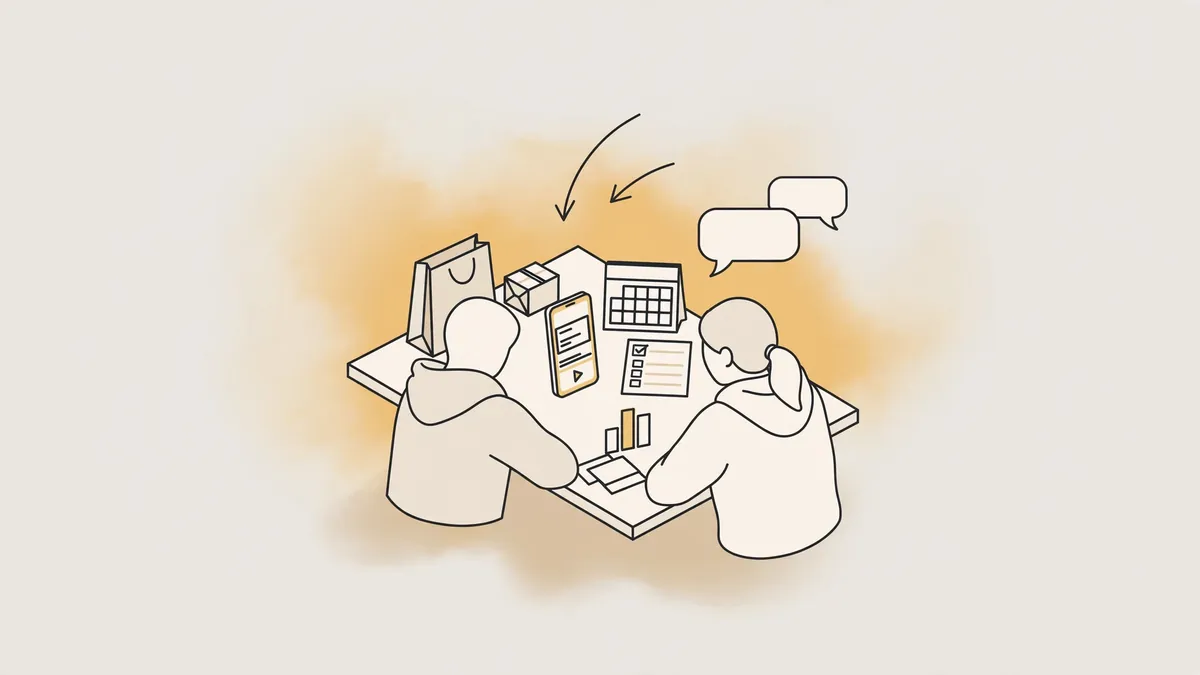
A successful shoot day starts before the camera arrives, with one plan covering location, crew, talent, products, props, schedule and the person who approves decisions. Anything unresolved can become waiting, reshooting or missing footage, so also check any official location requirements with the venue management and the relevant competent authority before fixing the date and booking.
- The location, backgrounds and entry, exit and movement times between shots.
- Direction, filming, sound, lighting and editing team.
- Who appears on camera, clothing, arrival time and approved lines.
- Original and spare products, tools and decor.
- A shot list ordered by location, with one person approving it during the day.
- When comparing offers from a Dubai ad filming company, ask in writing what each offer includes and what will be received in versions, sizes and files.
What does AI production need from you before scriptwriting?
Digital production needs sharp product photos from several angles, a store or product page link, and a precise description of the audience, offer, dialect and anything that must not be said. The photo based route needs no sample shipping, but weak photos or a vague message show directly in the result, however convincing the digital persona looks.
- Collect photos of the pack open and closed, plus close shots of details, texture and logo.
- Add the product page link and key customer questions and objections heard before purchase.
- Define audience, city, offer and one message per video.
- Choose dialect: Emirati, Najdi, Hijazi, general Gulf or English, according to ad audience.
- Approve script in writing before scenes are built, then review pack, text and voice before publishing.
AI generated supporting product images may accompany the video, but real product photos remain the reference for pack, logo and colour. Never present a digital persona as a customer who bought the product; the role is an advertising face. A video ad script template helps organise the message before approval.
When does real filming become a necessity rather than a style choice?
Real filming becomes necessary when the value lies in an event that will not repeat, a place customers will visit, a person the audience knows, or food prepared in front of the camera. In these cases the real footage is the proof itself, while AI can restate the message in short versions or explain benefits that need no physical presence.
Product launch or branch opening
- Reason to prefer real filming
- The event itself is news and its footage cannot be repeated with the same attendance
Property or showroom
- Reason to prefer real filming
- Customers compare space, location and real light
Restaurant or freshly prepared product
- Reason to prefer real filming
- Movement, steam and preparation are part of appeal and proof
Founder or expert statement
- Reason to prefer real filming
- Personal identity and trust are tied to the actual person
How do you choose between a cinematic brand film and a short product reel?
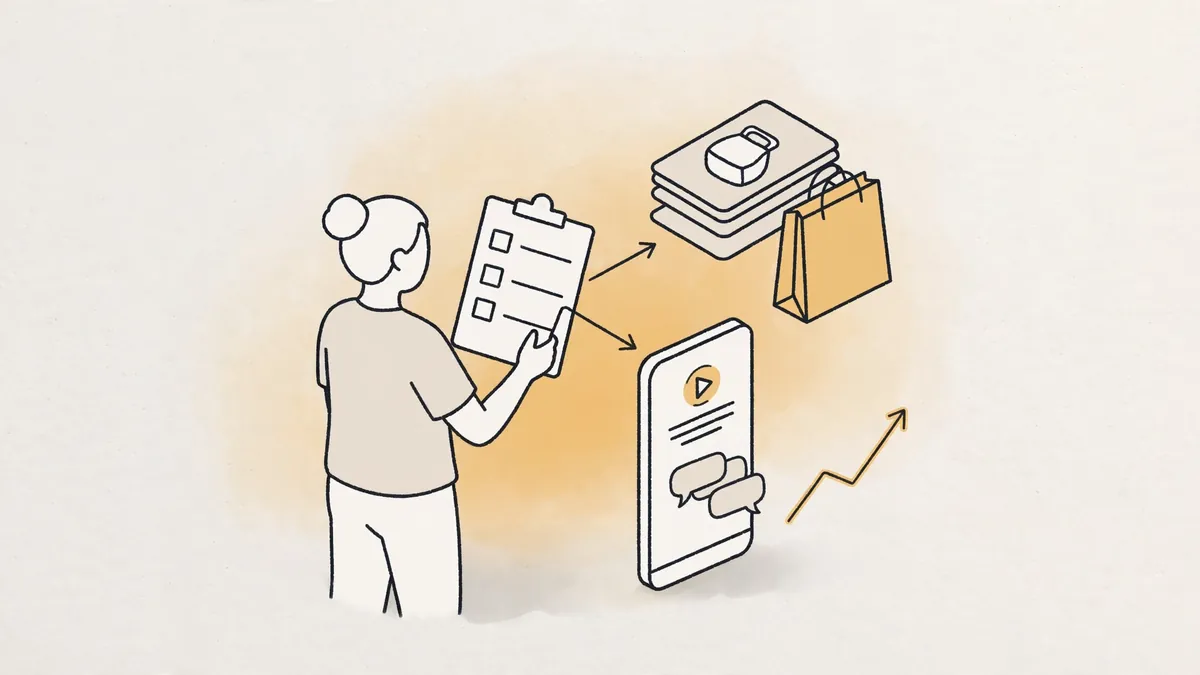
Choose a brand film when the goal is a story, place and identity that stays in the viewer mind, and choose a short reel when the goal is one product, one objection and one call to action. Many stores need both: a film that introduces the brand and a short series that turns that introduction into measurable visits and conversations.
Introduce identity and story
- Closest format
- Brand film with selected real scenes
Explain a benefit or objection
- Closest format
- Short reel with one message
Changing seasonal offer
- Closest format
- Short versions that can be replaced
Product page needing movement
- Closest format
- Close and clear product video
Do not judge both forms by the same measure: a brand film is reviewed for story, image quality and name recall, while a reel is reviewed for clarity of hook, product and call to action. Start with one message and compare reactions before expanding versions, applying the Meta and TikTok ad scaling method to one element at a time.
When does mixed production combine the best of both options?
Mixed production fits when strong real footage exists for the place, founder or product in use, but many seasonal hooks, endings and versions are needed around it. Film the real asset carefully once, then build short AI explanations around it, so the proof stays real and messages can multiply without reassembling the crew for every small change.
- Choose real footage that carries proof: place, preparation, use and a trusted face.
- Define messages that will change: hook, offer, season and call to action.
- Build digital versions around the same footage instead of generating a replacement for the real scene.
- Review transitions, colours and sound so the video does not feel like two separate clips.
- Keep original files organised by product and scene name for later versions.
The biggest mixing risk is a change in product shape, light or skin colour between real footage and the digital version. Unify the colour reference, text position and light direction, and review transitions on a phone before approval. Review the mixed production guide and the ad realism checklist before final delivery.
What questions settle the decision before you pay anything?
Before paying anything, write answers to five questions: what proof viewers need, where the video will run, which dialect it will use, who approves the script and footage, and which versions and sizes will actually be delivered. If any answer is vague, do not compare offers yet, because different things are being compared and the price of redefinition comes later.
- Proof: define what viewers must see personally and what a voice and text can explain.
- Rights: ask in writing about agreed uses for photos and video, and do not assume broader use without agreement.
- Disclosure: review platform settings before publishing and never present a digital face as a real customer.
- Dialect and approval: name the required dialect and one person to approve script and final version.
- Delivery: request a vertical version in 9:16 at 1080x1920 for phones, with clear file names.
- Archive: keep photos, footage and approved scripts in one folder.
How can you try this on your product?
Request a free sample video before any payment. Product photos and a store link are enough, with no sample shipping, and the first batch arrives 48 to 72 hours after script approval, in 9:16 for Meta, TikTok, Snapchat and YouTube Shorts.
Frequently asked questions
How much does product photography cost in Dubai? There is no single answer, because the range changes with location, number of shots, crew, editing and deliverables. Request a written item by item quote and compare what each offer includes before judging its final figure.
Do I need permission to film an ad at a specific location in Dubai? Check before booking with the venue management and the official authority responsible for the location and filming type, and do not build the schedule on presumed approval or timing. Fix the date after written confirmation arrives and keep it with the shoot day plan.
Do You Have to Label AI on Instagram, TikTok and YouTube? Review disclosure settings available inside each platform before publishing, and never present a digital persona as a real customer or real purchase experience. When generation or editing changes how viewers understand a scene, choose the clear disclosure format available there.
Should I start with one product or several products? Start with the product that is clearest in photos and most present in customer questions, test different hooks and messages on it, then carry lessons to another product. Early focus reveals weak photo, message or offer without scattering approval and review.
This guide belongs to AI Video Ad Production in Dubai, Abu Dhabi, and the UAE.