
Key takeaways: A hair product ad works when it starts from a clear daily problem, then shows texture, steps of use and the styled result in close scenes that can be made without a studio. What matters most is an honest comparison, a persona, dialect and hair type matched to the buyer, and copy that describes the sensory care experience without treatment promises.
How do you start a hair product ad without a studio shoot?
Start with clear product photos, a store link and a brief that names the hair type, main problem and styling occasion, then build scenes around texture, application and the finished look without a studio booking or mailed sample. Viewers should see the real pack, one clear step and one message immediately, not every benefit crowded into a single short video.
- Write in one line the hair type, main problem, product and occasion when the styled hair will be seen.
- Collect pack photos from the front and back, a close shot of the nozzle or pump, the store page link and the written directions.
- Set the opening, texture, application and final styling scenes before writing any dialogue.
- Write the script with one voice and one message, then review it through the short video ad script template before approval.
- Prepare alternate versions by changing the opening or step order while the pack and directions stay the same.
How do you show oil or mask results on hair before and after without misleading viewers?
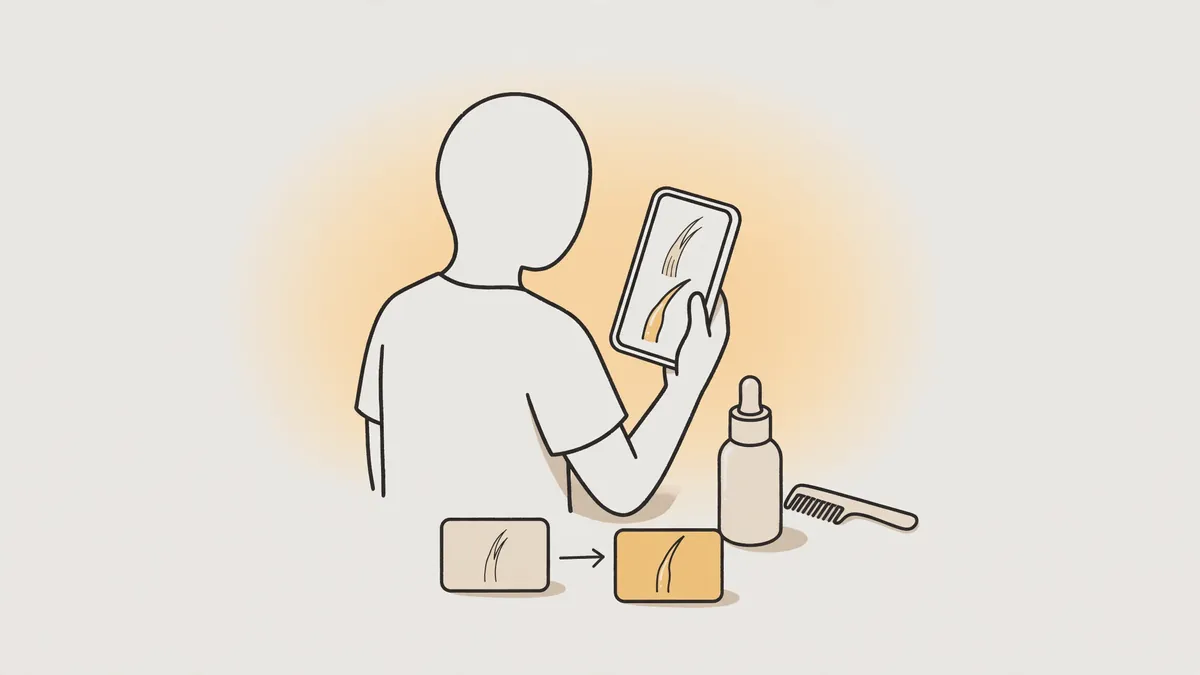
An honest result uses the same lighting, angle and similar background for both shots, with hair combed the same way before application and after styling. Focus on shine, orderly strands and easier combing as the camera actually shows them, and avoid changing filters, pulling the hair or choosing a different strand that suggests a result unlike the rest.
Lighting and place
- Before application
- One place and steady light
- After styling
- The same place and same light
Combing method
- Before application
- Gentle combing before the product
- After styling
- The same combing, then the stated styling
Strand shown
- Before application
- A wide section from all the hair
- After styling
- The same area without a misleading cut
On screen text
- Before application
- The step of use only
- After styling
- A description of the visible look only
Texture shot
- Before application
- A close drop or smear, as in skincare and beauty texture scenes
- After styling
- The same shot without recolouring
How do you film hair product use step by step for hair covered by hijab every day?
A daily routine can be shown without revealing all the hair, using shots of the pack, hands, product amount, washing and drying from discreet angles that focus on the action. The routine becomes clear when each scene follows the real order of use, then ends with preparing the hijab or a home hairstyle, whichever suits the intended viewer and product.
- Start with a shot of the pack between the hands over the sink, so the name and opening method are visible without showing the face.
- Place a small amount on the palm, then use on screen text to state whether the step comes during washing or after it, according to the pack directions.
- Film towel drying or the sound of the dryer from a side angle, keeping the focus on the tools and movement rather than revealing the hair.
- End with a shot of tying or arranging the hijab from the front, with one sentence linking the routine to the morning or to going out.
How do you choose a model whose hair resembles a Saudi buyer?
Choose a digital persona or model matching the audience in hair type, length, colour and styling, and record that choice in the brief before writing the script. Present her as an actor for the scene, never as a real customer. State the hair type on screen so viewers understand the routine suits a similar case, without claiming a personal testimonial.
Wavy and curly
- Matching persona features
- Clear waves and natural volume without misleading straightening
- Clarifying on screen text
- A routine for wavy hair
Colour treated
- Matching persona features
- Visible colour and styling that keeps movement in the ends
- Clarifying on screen text
- Care according to the pack directions
Dry looking
- Matching persona features
- Less orderly ends before styling, then a tidier look after
- Clarifying on screen text
- Steps for a tidier look
Long and thick
- Matching persona features
- Clear length and product spread through sections
- Clarifying on screen text
- Application through hair sections
How do you write a 3 second hook about shedding, frizz and split ends in dialect?
A strong hook quickly connects a familiar problem with a visible care step, using a question or daily observation in the dialect suited to the city and audience. Start with frizz, split ends or how hair looks after going out, then move straight to texture or application. Avoid describing the product as treating shedding, restoring growth or guaranteeing a result.
- Frizz: "Does your hair frizz as soon as you go out?" Then cut at once to a drop of oil or a smear of cream on one strand.
- Split ends: "Are the ends of your hair dry even after combing?" Then show application from the middle to the ends, as the pack explains.
- Hair noticed in the brush: "Do you see your hair in the brush every time you comb?" Then move to a general care routine without linking the scene to a promise to stop shedding.
- Review pronunciation in the Saudi and Gulf dialect guide, and choose one form suited to the audience city instead of mixing several dialects.
How do you show the scent of oil and the feel of cream without exaggerating?
Scent and feel can be suggested through a close shot of oil pouring slowly or cream spreading between fingers, with general sensory words such as light or rich and no exaggeration. Describe what viewers can check when opening and using the product, avoid comparisons promising lasting scent or instant softness, and let lighting reveal colour and thickness as they are.
- Pouring shot: Bring the camera close to the nozzle and let the oil fall slowly onto the palm until its colour and texture are visible.
- Spreading shot: Move the cream between two fingers and then onto a small strand, with a slow movement that shows thickness without excessive repetition.
- Sensory wording: Use only general descriptions such as a light texture, a rich feel or a clean scent, and link each one to the visible opening or application moment.
- Leave out promises of lasting scent or instant shine, and comparisons that make the product sound like a treatment or a fixed perfume.
- Borrow the shot order from beauty product ad ideas, while changing the examples to suit an oil, mask or cream.
How do you handle thickening and regrowth claims carefully in Saudi Arabia?
Start from the wording on the product pack and store page, and do not add thickening, regrowth or treatment promises just because they sound familiar. Review every line, on screen text and before and after scene. Replace absolute claims with descriptions of use and the styled look, and leave clear space to disclose any digital persona acting in the scene.
- Move the wording from the pack and store page into a review list, and do not expand the meaning of any phrase when turning it into a script or on screen text.
- Remove verbs that promise a radical change in thickness or growth, and replace them with a description of the method of use and the look after styling.
- Compare the before and after scenes to confirm steady light, angle and strand, and remove any cut that suggests a bigger difference than the camera filmed.
- Add an understandable disclosure when a digital persona performs an acted scene, and review the AI ad disclosure guidance before approving the version.
How can you try this on your product?
Request a free sample video before any payment. Product photos and a store link are enough, with no sample shipping, and the first batch arrives 48 to 72 hours after script approval, in 9:16 for Meta, TikTok, Snapchat and YouTube Shorts.
Frequently asked questions
How do you advertise hair products? Start with one problem and one hair type, then write each version with one opening, one step of use and one result scene, publish it in a format suited to each platform, and change one element at the next test.
How to Make a Product Video on TikTok? Start with a vertical scene showing the pack or the problem, then show texture and application in a short order, and end with the styled look and one call to open the product page, with visible text for viewers watching without sound.
Can scenes be planned from product photos and a store link alone? A scene plan and script can be prepared from them when the photos are clear and the method of use is written, without arranging a sample for filming, while reviewing the pack and claims remains essential before approving any version.
How do you choose between two versions before testing? Choose the version where the pack appears early, one step is explained clearly and the persona matches the hair type and dialect, then change only the opening in the comparison version.
For the full service, see AI Beauty and Skincare Video Ads.