
Key takeaways: Making an AI video ad takes seven steps: a clear brief, a sales angle, a script in the right dialect, scenes built from product photos, review, publishing and testing. The tool replaces the shoot, but the ad's quality comes from the steps before and after it.
Step 1: What brief do you need before starting?
The brief is one page that answers five questions: what the product is, who buys it, where the ad will run, what the key message is, and what must not be said. The clearer the brief, the fewer the revisions and the closer the script is to what you want.
- Clear product photos from more than one angle, with your logo and colours.
- The product page link, and customer reviews if you have them.
- The current offer, plus audience, city and dialect.
- One person who approves the scripts.
Step 2: How do you choose the sales angle?
The sales angle is the reason the customer will buy. One product can sell through several angles, each with a different audience, so you pick two or three to test instead of relying on one.
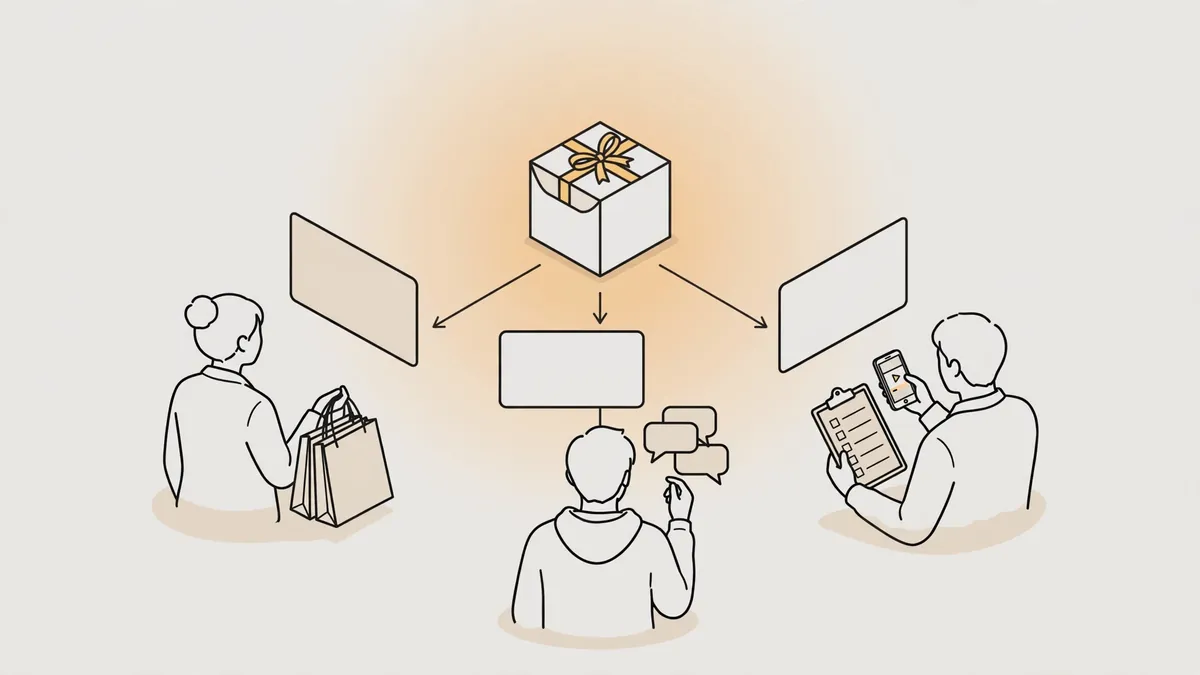
Problem
- Example
- "Does the AC dry out your skin?"
Gift
- Example
- "I had no idea what to gift… until I saw this"
Offer
- Example
- "Free shipping until the end of the week"
Comparison
- Example
- "I used to use that; now I use this"
Step 3: How is the script written?
A short script has three parts: a hook that stops the scroll, a middle that explains the benefit, and one call to action. It is written in the dialect from the start, gets on-screen text for viewers without sound, and you approve it before production.
Step 4: How are scenes built from product photos?
Scenes are built from your real product photos, so the pack and logo stay as they are and no samples need shipping. A digital persona is chosen to resemble your audience in age and style, and the voiceover is added in the chosen dialect.
Step 5: What is reviewed before delivery?
Every version is checked for product accuracy, lip sync, natural dialect, on-screen text placement, claims and disclosure. Details are in the realism checklist.
Step 6: How do you publish the ad?
The ad is delivered in 9:16 at 1080×1920 for TikTok, Snapchat and Reels, plus other sizes when needed. Name each file by product, angle and hook so you know which version won when reading results.
Step 7: How do you test and improve the ad?
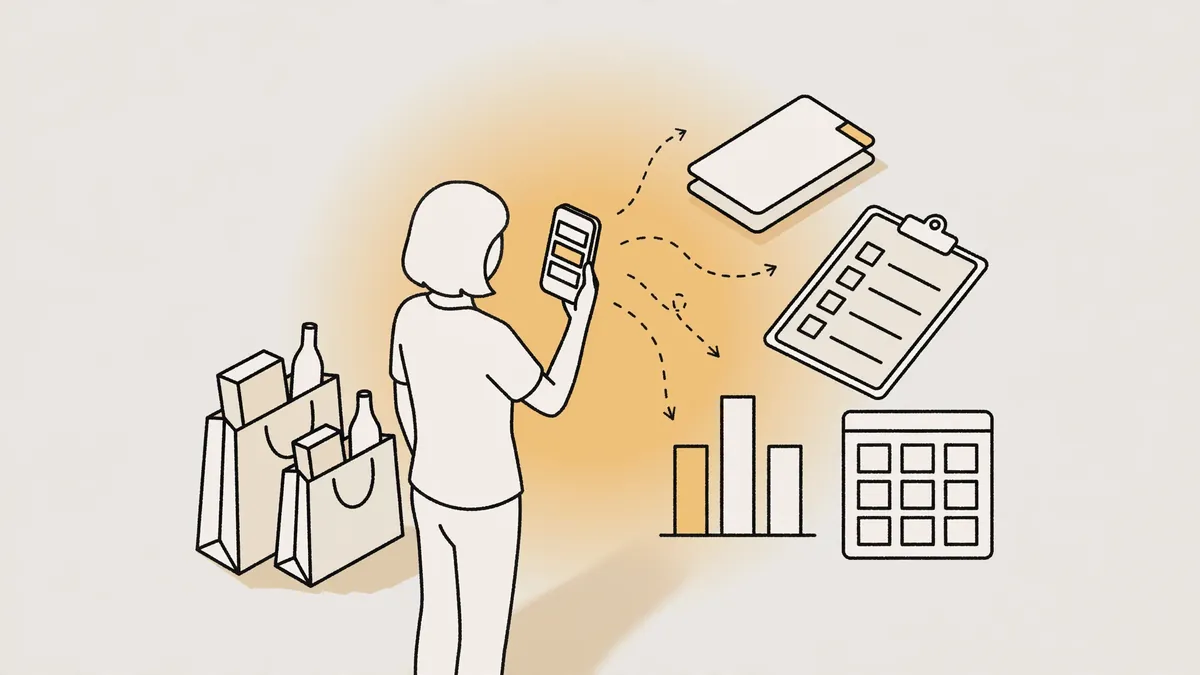
Launch versions on equal budgets, keep the winner and change one element per round: the hook, then the message, then the call to action. When the ad tires, new versions are ready. The method is in the ad testing matrix.
How long does all this take?
The first batch arrives 48 to 72 hours after script approval, because scenes are built without a shoot day. Testing and improvement continue every week, depending on a package of 30 to 200 videos a month.
What are the common mistakes when making an AI video ad?
Most mistakes do not come from the tool but from decisions before and after production: cramming every benefit into one video, sending weak product photos, a hook unrelated to the product, or judging versions too early. Avoiding them saves revision rounds and makes test results clearer.
Every benefit in one video
- What happens
- The viewer remembers none of them
- Instead
- One benefit per version
Weak or filtered product photos
- What happens
- The product looks different from the real one
- Instead
- Clear original photos
A flashy hook unrelated to the product
- What happens
- Views without purchase interest
- Instead
- A hook tied to the sales angle
Pausing a version on day one
- What happens
- You lose a version before it gets its chance
- Instead
- Wait for enough views to compare
Frequently asked questions
Can I make the ad myself with an AI tool? Yes, if you have the time and experience for scripting and review. Compare both options in self-serve tools versus a managed studio.
Which step matters most? The brief and the script, because the tool executes what it is given, and the idea's quality decides the ad's quality.
Can I start with one video? Yes. Start with a free sample video for your product, then choose the right package.
Which dialect can the ad be in? Saudi, in both Najdi and Hijazi, Emirati, general Gulf, or English, depending on your audience and their city.
Do you work with stores outside Saudi Arabia and the UAE? Yes. We work with stores in Saudi Arabia, the UAE, Kuwait, Qatar, Bahrain and Oman, and you can reach us on WhatsApp.
To see how we work in detail, visit how it works.
Part of our approach to AI UGC Ad Production in Saudi Arabia and the Gulf.